
Global attention brings global scrutiny
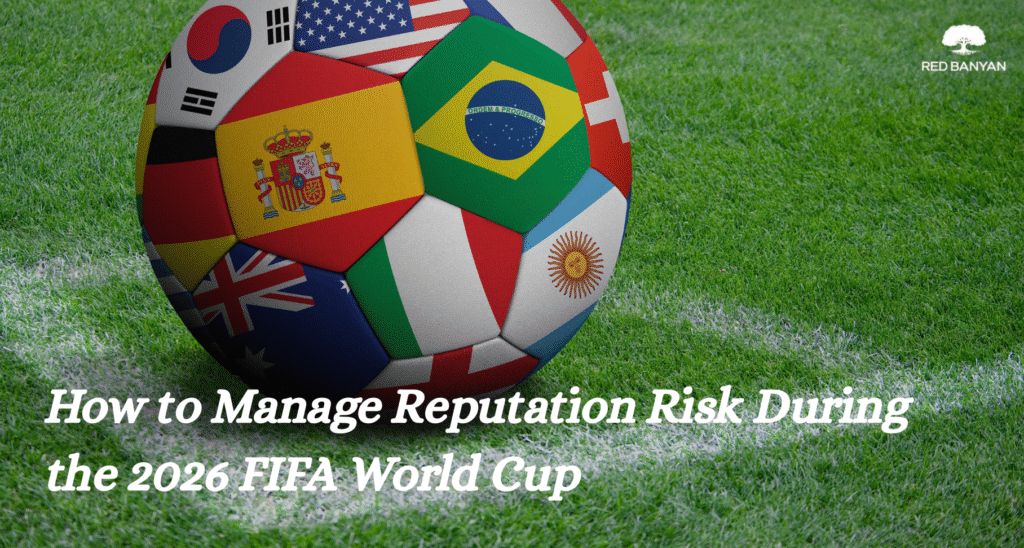
The 2026 FIFA World Cup will bring historic attention to North America. For the first time, the tournament will feature 48 teams and be hosted across three countries: the United States, Canada and Mexico. It will be one of the most visible sporting events in modern history, creating enormous opportunities for brands, sponsors, executives, host-city partners and organizations connected to the event.
But visibility is not the same as trust. Attention at this scale can quickly become scrutiny, and companies need to understand the World Cup reputation risks before they find themselves in the middle of them.
The World Cup is more than a marketing opportunity. It is a global stage where sports, politics, business, public safety, labor issues, immigration debates, protests and online narratives can collide in real time. Organizations that are connected to the tournament cannot afford to assume the public will focus only on soccer.
In a high-profile event environment, the story can shift without warning.
The issues around the tournament will shape the communications environment
The World Cup will draw fans from around the world, but it will also attract activists, journalists, political voices, critics and online commentators looking to use the global spotlight to elevate their own concerns. That is not unusual. Major international events always carry broader social and political meaning.
What is different today is the speed and intensity of the modern media environment.
Immigration issues may become part of the conversation. Labor pressure could affect hospitality, transportation, stadium operations and other industries tied to the tournament. Fan safety and security questions may dominate coverage if even one incident goes wrong. Protests may unfold in host cities. Geopolitical tensions may spill into public debate. A single viral video could put an organization, executive, employee or partner at the center of a story it never expected to face.
That is why brands need a 2026 World Cup communications strategy before the tournament reaches peak attention.
The mistake is believing that only FIFA, national teams or host governments need to worry about these issues. In truth, any organization with a public connection to the event can be pulled into the narrative.
Reputation risk does not stay in its lane
A sponsor may face questions about who it supports and why. A host-city partner may be asked about policing, public safety or transportation failures. A hotel or restaurant group may become the target of labor complaints. A vendor may be scrutinized for its hiring practices. A corporate executive may be criticized for a public statement, a private comment or even silence on a controversial issue.
The public rarely separates these distinctions cleanly. When attention is high, association matters.
That means companies must think beyond their direct responsibilities. They must understand how their brand could be connected to broader controversies, even if they did not create them. Being technically uninvolved may not be enough to avoid reputational damage.
This is the heart of sports event reputation management. Companies must prepare not only for what they control, but also for what they may be associated with in the public mind.
In the court of public opinion, perception often moves faster than facts.
Online narratives can turn opportunity into exposure
The most serious reputational threats around the World Cup may not begin with a press conference or newspaper article. They may begin with a phone video, an anonymous post, a hashtag, a misleading claim or a comment taken out of context.
Social media compresses time. It rewards emotion. It often spreads accusations before verification. For companies, that creates a dangerous gap between what is true and what people believe.
A small incident can become a global story in hours. A poorly handled response can extend the life of a controversy. A vague statement can create more questions than answers. Silence may be interpreted as indifference. Overreaction may make the organization look defensive or guilty.
This is why online narrative management must be part of any serious World Cup crisis communications plan. Companies should know who is monitoring social channels, who is evaluating risk, who is approving responses and when an issue needs to be escalated.
They cannot wait until a crisis emerges to decide how they will communicate.
Preparation must come before the first problem
Organizations connected to the World Cup should be asking hard questions now.
Where are they most vulnerable? Which stakeholders matter most? What issues are likely to arise in their city, industry or business relationship to the tournament? Who has authority to approve statements? Who monitors social media? Who speaks to the press? What happens if an employee is filmed in a controversial moment? What happens if a protest targets the organization? What happens if a partner or vendor becomes the story?
These questions are not theoretical. They are practical.
Major event crisis planning should include clear messaging, trained spokespeople, monitoring systems, escalation protocols and decision-making processes. Legal, communications, operations and executive leadership must be aligned. In a fast-moving moment, internal confusion can become an external crisis.
Companies should also prepare stakeholder communications before they are needed. Employees, customers, investors, partners, public officials and community leaders may all need different information at different moments. A one-size-fits-all statement rarely works when the pressure is high and the audience is fragmented.
The worst time to build a crisis plan is during a crisis.
Companies should not hide from the opportunity
None of this means brands should avoid the World Cup. That would be the wrong lesson.
The tournament offers a powerful chance to build goodwill, engage communities, showcase values, reach global audiences and strengthen reputation. Companies that communicate with discipline and authenticity can benefit enormously from being part of such a historic event.
But they must approach the opportunity with clear eyes.
A major event does not automatically make a brand look bigger, better or more trusted. It magnifies whatever is already there. Strong organizations can use the spotlight to reinforce credibility. Unprepared organizations can find themselves exposed.
This is especially true for sponsors and partners. Sponsor reputation risk is not limited to the logo on a sign or the language in a contract. It includes how the organization is perceived when surrounding issues become controversial. Brand visibility and scrutiny often arrive together.
The difference is planning.
The spotlight rewards the prepared
The World Cup will create winners and losers on the field. Off the field, the same will be true for reputations.
For companies, sponsors, executives and host-city partners, the central lesson is simple: attention is powerful, but unmanaged attention can be dangerous. Organizations cannot control every issue that may arise around the tournament. They can control how prepared they are, how quickly they respond, how clearly they communicate and how well they protect trust.
Crisis communications planning for high-profile sporting events is not optional for organizations that will be visible during the World Cup. It is a business necessity. The companies that prepare now will be better positioned to seize the opportunity, manage public scrutiny and withstand online backlash.
Those that rely on visibility alone may discover that the global spotlight does not only illuminate success. It also exposes weakness.
Crisis PR agencies like Red Banyan help organizations identify vulnerabilities, prepare messaging, monitor fast-moving narratives and respond with discipline when scrutiny arrives. As the World Cup spotlight intensifies, the companies that plan ahead will be best positioned to protect trust and turn visibility into lasting reputational value.
Contact us now or schedule a free confidential consultation.