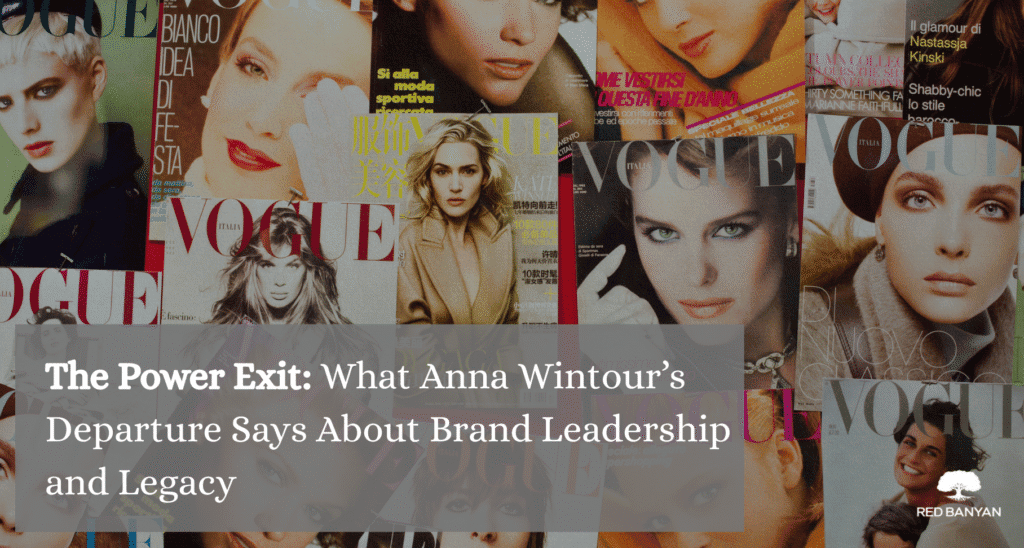

Anna Wintour’s recent decision to retire from her role as Vogue’s editor-in-chief marked the end of a significant era in media. For PR and communication professionals, her departure stands as a powerful lesson in brand leadership.
Over nearly four decades, Wintour managed two distinct but interconnected brands: her own identity as a global symbol of authority and taste, and Vogue as a cultural institution. Each brand operated independently, but both benefited from shared values, visual alignment, and message control.
For PR and corporate branding professionals, Wintour’s legacy offers a compelling example of how to lead, evolve, and exit without losing control of your narrative.
Why High-Profile Leadership Transitions Trigger PR Crisis : The Anna Wintour Brand
Wintour didn’t rely on constant visibility to establish her presence. She developed a consistent, recognizable image built on restraint, clarity, and visual markers. Her precision bob, sunglasses, front-row presence on runways, and longtime role organizing the Met Gala became part of her signature. Her silence in the media landscape made her selective appearances more valuable. She didn’t aim to be relatable. She positioned herself as definitive.
That consistency over time gave her a reputation for discipline and high standards. It also made her a brand that audiences, designers, and advertisers could interpret without needing a press release. Everything she did reinforced the same strong identity.
This brand discipline allowed her to maintain credibility across decades of cultural change. She didn’t chase popularity or pivot with every trend. She focused on building long-term value through consistency and authority.
How Wintour Transformed Vogue Into a Crisis-Resilient Cultural Brand
While cultivating her personal brand, Wintour simultaneously redefined Vogue. She evolved the magazine from a fashion publication into a multi-dimensional brand with influence across politics, celebrity, and culture.
She made the cover a statement, placing figures like Michelle Obama, Serena Williams, and Greta Thunberg front and center. Each editorial choice expanded Vogue’s relevance without compromising its core identity. Wintour transferred Vogue’s brand from fashion magazine to cultural commentary, all while maintaining its visual aesthetics.
When media competitors shifted toward sensationalism and influencer culture, Vogue held its position. Wintour allowed the brand to evolve digitally while still maintaining its editorial weight and aesthetic consistency. Her reliable approach preserved trust with readers and advertisers alike.
Her work with Vogue shows what happens when a brand grows with discipline. It becomes more than a product. It becomes a cultural authority.
Personal Brand vs. Institutional Brand: How Separation Prevents Leadership Crises
What made Wintour’s branding strategy so effective was her ability to keep the two identities—her own and Vogue’s—separate yet strategically aligned. She used her personal brand to elevate Vogue, but she never allowed the two to merge completely. She gave both brands independent stability while managing the success of each.
By stepping away from the editor-in-chief position while remaining a global leader at Condé Nast, Wintour preserved her legacy without overshadowing the brand’s next phase. Her personal influence remains intact, but Vogue has room to adapt.
This separation between personal and institutional brand is critical for any executive. When leadership changes occur, organizations with strong brand boundaries are more resilient.
Crisis-Ready Brand Leadership: What Organizations Can Learn From Wintour’s Exit
Whether you’re managing your own image or leading a company, Wintour’s long-term strategy provides valuable insight for professionals shaping personal or corporate identities:
- Be intentional with your visual identity and tone. Consistency builds trust.
- Maintain message control. Choose when and how to speak to protect your authority.
- Create separation between your personal brand and your organization’s brand. This approach protects both during leadership transitions.
- Elevate your brand through associations that align with your values. Every appearance sends a message.
- Prioritize long-term brand equity over short-term attention. Authority takes time to build and seconds to lose.
Looking to protect your brand’s legacy or plan a high-impact leadership transition?
Red Banyan® helps executives and organizations lead with clarity and exit with intention. Contact us to shape a brand narrative that lasts.
Want more insight? Read Canceled, Then Recovered: What Celebrity Comebacks Reveal About the Limits of Cancel Culture or When Optics Go Viral: How Presidential Slip-Ups Become PR Headaches
Frequently Asked Questions
Be intentional with your visual identity and tone, maintain message control, create separation between your personal brand and your organization's brand, elevate your brand through aligned associations, and prioritize long-term brand equity over short-term attention.
Wintour developed a consistent, recognizable image built on restraint, clarity, and visual markers including her precision bob, sunglasses, and front-row runway presence. Her selective appearances and silence in the media landscape made her more valuable and positioned her as definitive rather than relatable.
She evolved Vogue from a fashion publication into a multi-dimensional brand with influence across politics, celebrity, and culture by placing figures like Michelle Obama, Serena Williams, and Greta Thunberg on covers while maintaining visual aesthetics and editorial weight.
Keeping personal influence distinct from institutional identity allows both brands to thrive independently and ensures organizational resilience during leadership transitions, protecting long-term equity for both.
By stepping away from the editor-in-chief position while remaining a global leader at Condé Nast, Wintour preserved her legacy without overshadowing the brand's next phase, giving Vogue room to adapt while keeping her personal influence intact.
She kept her personal identity and Vogue's brand separate yet strategically aligned, using her personal brand to elevate Vogue without allowing the two to merge completely, giving both brands independent stability.
She didn't chase popularity or pivot with every trend, instead focusing on building long-term value through consistency and authority while allowing the brand to evolve digitally and maintain editorial integrity.