
How the TSA Shutdown Brought U.S. Airports to a Breaking Point
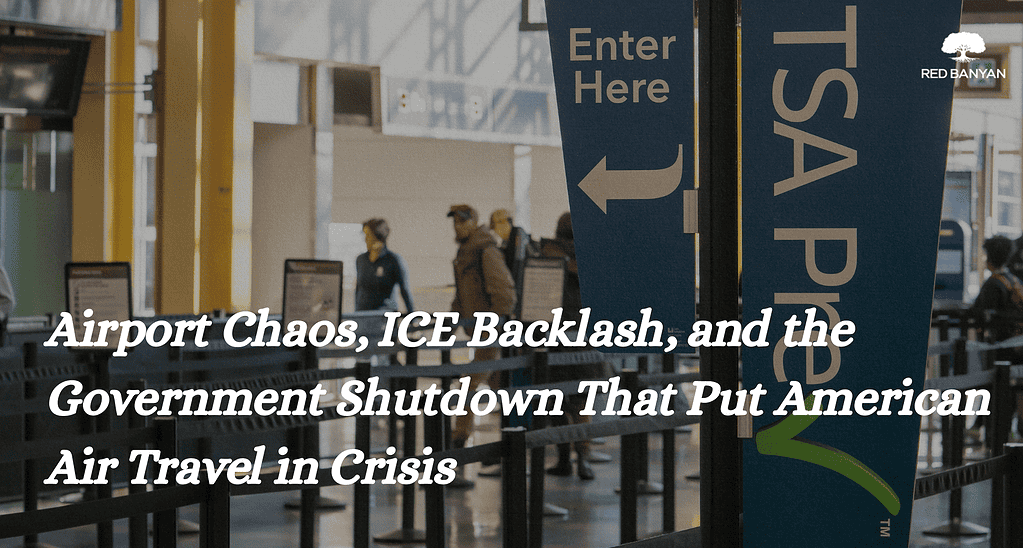
By late March 2026, American air travel was in a state of compounding failure that no single agency, airline, or political party could contain. The partial government shutdown that began on February 14 had left roughly 61,000 TSA workers without paychecks for over five weeks. Nearly 500 officers quit. Callout rates topped 40% at major hubs. Security wait times at airports like Houston Bush Intercontinental and Hartsfield-Jackson Atlanta stretched past four hours, and the acting TSA administrator told Congress the agency was experiencing the longest checkpoint delays in its history.
Spring break travelers arrived to lines snaking out of terminals and into parking garages. Some airports stopped publishing wait times altogether because conditions were changing too fast to report accurately. Delta redeployed corporate employees from finance and IT departments to help manage crowds at its Atlanta hub. Private jet charter companies reported a 39% spike in bookings. Smaller airports warned they might have to close entirely.
The TSA staffing crisis alone would have been a major story. But what turned it into a full-blown reputational catastrophe for the federal government was a series of decisions and events that layered on top of one another in the space of a single week.
ICE Agents Arrive at 14 Airports With No Clear Mission
On March 23, the Trump administration deployed Immigration and Customs Enforcement agents to 14 of the country’s busiest airports, including JFK, Newark, Atlanta, Houston, and Chicago O’Hare. The stated purpose was to relieve pressure on the overwhelmed TSA workforce by handling non-screening tasks like crowd management, guarding exits, and checking identification.
The problem was that no one in the administration could agree on what ICE’s role actually was. DHS described the agents’ duties in narrow, procedural terms. Border czar Tom Homan told Fox News they would be arresting criminals and investigating trafficking. President Trump posted on Truth Social about arresting undocumented immigrants at airports, singling out Somali migrants by name.
For travelers, the confusion was immediate. Were these armed agents there to help them get through security, or to conduct immigration enforcement? TSA union leaders were blunt in their assessment, with one calling the deployment a “Band-Aid over a gaping wound” and another calling it an outright insult to the unpaid officers still showing up for work.
ICE agents are not trained to operate X-ray machines or conduct passenger screening, and multiple reports described them standing in terminals with little to do. A pilot overheard by NBC News said he hoped the agents would not “create more chaos, because they’re not trained to have the patience we have in this business.”
A Viral Arrest at SFO Shifted the Story Overnight
On the evening of March 22, bystanders at San Francisco International Airport recorded plainclothes federal agents forcibly detaining a 41-year-old Guatemalan mother while her 9-year-old daughter stood nearby in tears. The footage spread across TikTok, Instagram, Reddit, and X within hours, reaching millions of viewers before any government official had issued a statement.
DHS confirmed the next day that the woman had an outstanding deportation order dating to 2019 and had attempted to flee during the arrest. The factual basis for the detention may have been sound, but the emotional reality of a child crying in a crowded terminal had already locked in as the dominant image of the story. By Tuesday, the mother and daughter had been deported to Guatemala.
A New York Times investigation then revealed that TSA had flagged the woman to ICE days earlier through a domestic passenger data-sharing arrangement, broadening the story into a national conversation about whether buying a plane ticket had become an immigration enforcement trigger. Community advocates in San Francisco filed formal complaints against the SFPD, alleging officers violated sanctuary law by forming a perimeter around the ICE agents during the arrest.
Safety Concerns, a Runway Collision, and the Limits of a Depleted System
The same week ICE arrived at airports, a separate crisis compounded the sense of systemic failure. On the evening of March 23, an Air Canada regional jet collided with a fire truck on the runway at LaGuardia Airport, killing both pilots and shutting down the airport overnight. The closure diverted flights to an already-overwhelmed JFK, where passengers were already contending with multi-hour security lines and suspended wait-time reporting.
The acting TSA administrator also told Congress that assaults on TSA officers had increased more than 500% since the shutdown began, a statistic that underscored how volatile conditions at airports had become. Officers who were still reporting to work were doing so without pay, in overcrowded facilities, facing increasingly frustrated passengers, and now working alongside armed federal agents whose presence generated its own tensions.
Airlines scrambled to adapt. Delta waived rebooking fees for passengers who missed flights due to security delays. Travel advisors reported that 61% of their members were seeing significant business impact from the shutdown. Industry groups sent letters to Congress warning that the disruption could persist through the FIFA World Cup if left unresolved.
Why Public Opinion Made Everything Worse
The airport deployment landed in a political environment where public confidence in ICE had already declined sharply. A PBS News/NPR/Marist poll from late January found that 65% of Americans believed ICE had gone too far, up from 54% in mid-2025. Six in ten disapproved of the agency overall. A March survey found 52% of Americans opposed ICE deportation operations, while 84% supported requiring agents to wear body cameras.
The visual contrast at airports reinforced that sentiment. TSA officers who had been working without pay for weeks, some reportedly donating plasma to cover rent, stood alongside fully paid ICE agents handing out water bottles. A traveler at Newark told CNN she could not understand why ICE agents were collecting paychecks while the people actually screening passengers went unpaid.
That image became the story in miniature: a government that could fund enforcement but not the workers keeping airports safe. No communications strategy, however disciplined, could overcome that kind of built-in contradiction.
What the Airport Crisis Reveals About Communications Failures at Scale
The airport situation is a case study in how crises compound when organizations treat communications as an afterthought. Each element on its own was manageable. Together, they overwhelmed every institution involved.
Speed determines who controls the narrative. The SFO arrest footage defined the national conversation within hours. The government’s factual rebuttal arrived more than a day later. Organizations that operate in public-facing environments need holding statements and rapid-response plans for foreseeable scenarios, because the window to shape first impressions is now measured in minutes.
Internal alignment has to come before public action. DHS, Homan, and the president each described ICE’s airport mission differently. That inconsistency allowed critics to fill the vacuum with their own interpretation and left supporters with no coherent message to amplify. Every spokesperson needs to work from the same framework before any high-visibility initiative is announced.
Reputation precedes you into every room. ICE entered airports with a 65% unfavorability rating among the general public. Ignoring that context meant the deployment was destined to generate backlash regardless of how agents actually behaved on the ground. Organizations should pressure-test how their brand will be received before increasing their visibility, not after.
Emotional visuals override institutional arguments. A child crying in an airport terminal will outperform a legally accurate press statement every single time. If an operation carries the risk of producing negative imagery in a public space, the communications plan has to account for that before the first camera starts recording.
When the Stakes Are This High, Preparation Is Everything
The airport crisis did not grow from one mistake. It grew from a cascade of failures across government, Congress, and multiple federal agencies, each compounding the last. A funding dispute starved frontline workers. A deployment conflated two separate missions. Messaging contradicted itself at every level. A viral arrest crystallized public anger. And a runway collision underscored how fragile the entire system had become.
That kind of cascading dynamic is not unique to government. Businesses, institutions, and public figures face the same compounding risks when communications planning falls behind the pace of events. The organizations that come through these moments with their credibility intact are the ones that invested in preparation, alignment, and rapid response capability long before the crisis arrived.
Experienced crisis communications firms like Red Banyan help organizations build that infrastructure, align their messaging across every stakeholder, and respond to high-pressure situations with the discipline and coordination that public scrutiny demands.
Contact us now or schedule a free confidential consultation.