
In a world constantly bombarded with political strife, environmental disasters, and negative headlines, moments of hope and wonder are rare. Yet, NASA’s Artemis II mission broke through this noise, offering not only a remarkable technological achievement but also a deeply human experience. The mission to return humans to the Moon represented a powerful reminder of our shared capacity for greatness.
The Emotional Power of Artemis II and Its Iconic Earth Views
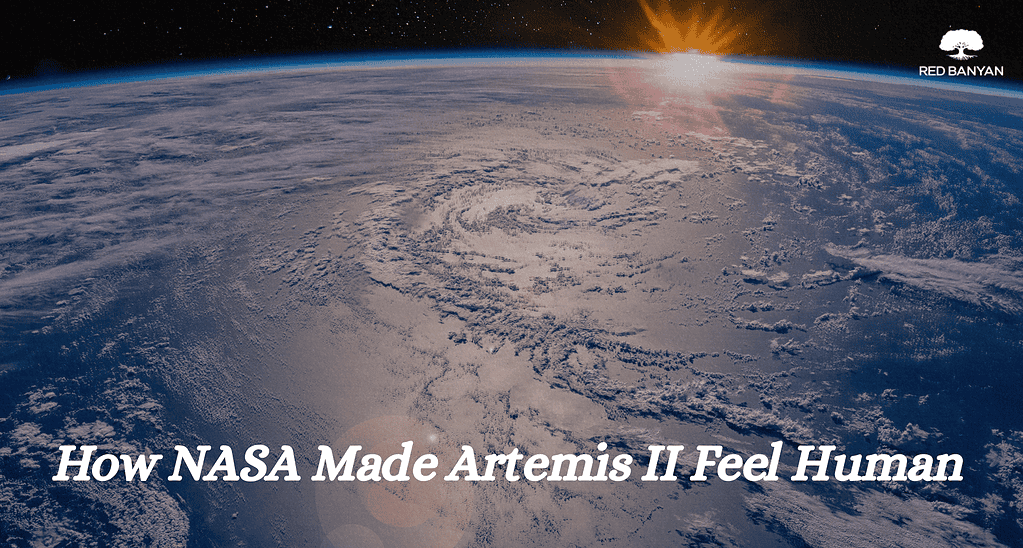
NASA’s Artemis II mission captured the world’s attention, blending space exploration history with emotional storytelling. While the mission’s technical feats were impressive, it was the emotional imagery and moments that resonated with audiences worldwide. The crew’s journey towards the Moon, punctuated by breathtaking visuals like the iconic “Earthset” images, was a profound reminder of our place in the universe. These stunning photos, showing Earth hanging in the vastness of space, symbolized the fragility and beauty of our planet. The Earth, viewed from millions of miles away, looked fragile, a symbol of unity in a time of division.
But it wasn’t just the breathtaking visuals that brought the mission to life; it was the way NASA showcased the crew. As the astronauts journeyed toward the Moon, their emotional reactions—ranging from joy to awe—were shared with the public, making the mission feel not only historic but deeply personal. The Artemis II crew’s emotional reactions connected people to the mission, making it feel like a shared experience.
How Artemis II Set a New Record in Deep Space Exploration
One of the key milestones of Artemis II was the record-breaking distance achieved during the mission. On April 6, during their lunar flyby, the Artemis II crew exceeded Apollo 13’s record by traveling about 252,756 miles (406,778 km) from Earth, making history with the furthest distance humans have ever traveled from our planet. This incredible feat added another layer of significance to the mission. The crew didn’t simply reach the Moon; they ventured into deep space, expanding the frontiers of human exploration.
As they moved through deep space, the astronauts experienced firsthand what it feels like to be on the edge of the unknown, with Earth appearing smaller and smaller in the distance. Commander Reid Wiseman’s reaction as he gazed at Earth—reflecting on how far humanity had come—was a powerful reminder that space exploration is as much about the human spirit as it is about technological progress.
The Astronaut Moments That Made Artemis II Feel Personal
Beyond the technical milestones, it was the crew’s emotional experiences that truly resonated with the public. On April 6, the crew executed a lunar flyby, capturing not only the grandeur of the mission but also the humanity behind it. The crew took time to reflect on the significance of the journey, discussing how it felt to see Earth from space for the first time and how they were moved by the opportunity to represent all of humanity. These moments, shared with the world, transformed the mission from a technical feat into a deeply human experience.
During the flyby, the crew also made an emotional gesture—dedicating a bright spot on the lunar surface to Commander Wiseman’s late wife, Carroll, further underscoring the personal and emotional side of the mission. These acts humanized the astronauts, showing that beyond their roles as explorers, they were individuals with families, emotions, and personal stories.
Why Artemis II Represents More Than a Moon Mission
This humanized approach to storytelling also tied Artemis II to broader cultural themes, particularly American pride and unity. In an era of increasing division, the mission offered a moment for the nation to come together. Artemis II became a symbol not only of scientific advancement but of the spirit of exploration that defines the United States. The success of Artemis II wasn’t simply about the technical achievement—it was about the collective effort to push humanity forward, offering a rare moment of bipartisan unity.
NASA framed the mission as a shared triumph, showcasing the national and global significance of returning to the Moon. In doing so, Artemis II transcended politics, offering the world a moment of collective pride in the shared pursuit of exploration and discovery.
The Science and Discoveries Behind Artemis II
Artemis II didn’t only make history with its human moments and record-breaking feats—it also advanced science. The mission carried cutting-edge experiments, including a biological “organ-on-a-chip” experiment designed to study how deep space conditions affect human tissue. The crew witnessed six natural meteorite impacts on the Moon’s far side, a rare event that provided valuable data for future missions. These scientific breakthroughs were just as significant as the emotional milestones, showing how human exploration can drive both technical and scientific progress.
Public engagement around Artemis II has been unparalleled. The mission has captured public imagination, drawing rocket-watch events, classroom activities, and even themed merchandise—a rare unifying story amid global political division. This broad public engagement was a testament to how NASA managed to weave together the personal, emotional, and scientific elements of the mission into a story that resonated with everyone.
How Artemis II Captured Global Attention and Inspired Millions
At its core, Artemis II was more than a mission to the Moon. It was a celebration of human achievement, a reminder of what can be accomplished when we work together toward a common goal. The mission’s emotional resonance, along with its groundbreaking science—such as the organ-on-a-chip experiment and the meteoroid impacts observed on the Moon—demonstrated that Artemis II was a triumph for humanity.
In today’s polarized world, NASA found a way to offer something that transcended politics and division—a moment of collective pride. Artemis II showed us that when history is framed as a shared, emotional experience, it’s not just a scientific achievement—it’s a moment that belongs to everyone. By pairing technical excellence with emotionally resonant storytelling, NASA created a narrative that was accessible and inspiring. Institutions seeking to connect with the public can learn from this—showing that true connection happens when humanity and achievement are intertwined in a way that feels intimate, authentic, and alive. Artemis II will not just be remembered for its technological success but for the human spirit it represented, making it a rare and precious moment in our shared history.
PR agencies like Red Banyan are crucial in shaping how monumental achievements like Artemis II are communicated, using strategic storytelling to connect emotionally with the public and ensure lasting engagement and pride.
Contact us now or schedule a free confidential consultation.