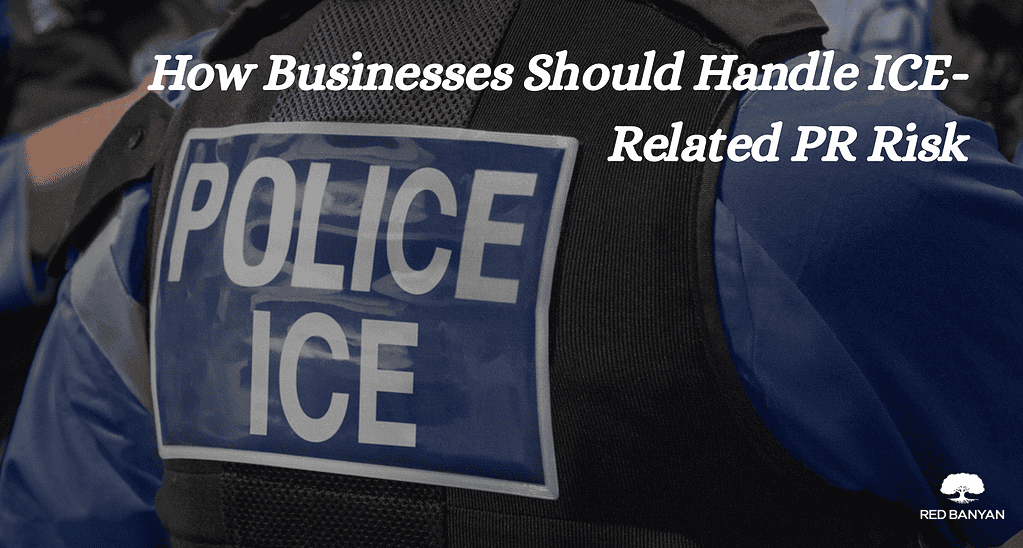

Immigration enforcement has become a sensitive and highly visible issue for many companies across the United States. Actions by U.S. Immigration and Customs Enforcement (ICE) can affect a business in direct and indirect ways, sometimes with little warning.
For some organizations, that impact takes the form of enforcement activity near a job site or facility. For others, it arises through financing decisions, real estate transactions, government contracts, or investor concerns tied to immigration policy. Even companies with no operational connection to ICE may find themselves responding to protests, workforce anxiety, or media questions.
From a public relations standpoint, this is a complex and delicate challenge. It requires steady leadership, thoughtful communication, and close coordination between legal and communications teams.
Why ICE-Related Issues Create Reputational Risk
Immigration enforcement touches on law, labor markets, politics, and deeply personal experiences. Because of that, conversations around ICE tend to carry strong emotions and firm opinions.
When a company becomes connected to an ICE-related development, the reaction often extends beyond the immediate facts. Employees may seek reassurance. Investors may request transparency. Community members may organize or voice concerns. Reporters may ask direct questions about a company’s role or position.
In this environment, the objective is not to take sides in a public policy debate. The objective is to communicate responsibly, protect the organization, and treat the issue with care.
Two Common Ways Companies Are Affected
ICE-related PR challenges typically fall into two broad categories. Understanding which applies to your organization helps shape the right response.
- Direct Operational Impact
Some companies experience enforcement activity at or near their facilities. That may involve arrests, site visits, workforce disruptions, or increased public attention.
These situations raise immediate questions. Leadership must decide how to communicate with employees, what information can be shared publicly, and how to respond to media inquiries. Internal communication becomes especially important. When employees receive clear and timely information from leadership, uncertainty tends to decrease. When they rely on rumors or social media posts, anxiety grows.
A measured approach works best:
- Stick to verified facts
- Avoid speculation
- Coordinate every public statement with legal counsel
- Make sure managers understand how to handle questions from staff and from outside parties.
- Indirect or Transactional Exposure
Other companies encounter ICE-related controversy through business relationships or transactions. This might include leasing property later used by federal agencies, financing projects connected to immigration enforcement, or serving as fiduciaries on deals that attract public scrutiny.
In these situations, pressure can come from several directions at once. Investors may have strong views. Employees may request explanations. Activist groups may contact the company or engage online. Government stakeholders may expect continuity.
Leaders sometimes feel pulled between competing responsibilities. That tension makes disciplined messaging even more important. The company’s response should focus on its role, its obligations, and its commitment to lawful operations, rather than drifting into political commentary.
Internal Communication Deserves Equal Attention
One of the most common mistakes companies make during sensitive situations is overlooking internal audiences.
Employees want to know what is happening and how it affects them. Even when leadership cannot share every detail, acknowledging the situation and outlining next steps builds credibility. Silence often creates more concern than a concise, fact-based update.
Clear internal guidance also reduces the risk of inconsistent messaging. When managers understand what can and cannot be said, they are less likely to provide off-the-cuff responses that complicate the issue.
How to Approach Messaging Thoughtfully
When ICE-related issues intersect with your business, consider a few guiding principles:
- Confirm facts before communicating
- Align messaging with legal advice
- Keep statements focused on the company’s role and responsibilities
- Avoid partisan language
- Prepare leaders for potential media inquiries
Tone matters. This is not an area where humor, defensiveness, or sweeping generalizations serve the organization well. A calm, respectful voice carries more credibility.
It also helps to think through scenarios in advance. If enforcement activity occurs near a facility, who speaks on behalf of the company? If reporters call, what is the holding statement? If employees raise concerns, how will leadership respond? Planning ahead reduces the likelihood of reactive decisions.
Frequently Asked Questions About ICE-Related PR Risk
What should a company say if ICE arrests employees at a worksite?
Start with verified facts and coordinate closely with legal counsel. Communicate internally first so employees understand what is known and what steps leadership is taking. Public statements should remain factual and focused on compliance with the law, workplace safety, and operational continuity. Avoid speculation about motives or outcomes.
Should a company take a public position on immigration policy?
In most cases, companies benefit from focusing on their operations, legal obligations, and workforce commitments rather than broad policy debates. Taking a political stance can shift attention away from the company’s core responsibilities and create additional reputational exposure.
How should leadership respond to employee concerns about ICE activity?
Acknowledge the concern directly. Provide clear information about what the company knows and what it can and cannot control. Reinforce workplace policies and available support resources. Consistent, transparent communication helps maintain trust, even when answers are limited.
What if investors pressure the company to withdraw from an ICE-related transaction?
Treat the issue as both a governance and communications matter. Leadership should align with legal and financial advisors before speaking publicly. When communicating externally, focus on fiduciary duties, contractual obligations, and the company’s decision-making framework. Avoid language that suggests internal division or political positioning.
How can companies prepare before an ICE-related issue arises?
Develop a crisis communications plan that includes potential immigration enforcement scenarios. Draft holding statements, identify designated spokespeople, and conduct media training for executives. Establish internal reporting procedures so leadership receives accurate information quickly. Preparation reduces confusion and helps the company respond with clarity.
When should a company engage a crisis communications firm?
If ICE-related activity results in arrests, sustained media coverage, organized protests, or investor backlash, outside guidance can help leadership navigate competing pressures. Experienced crisis advisors coordinate with legal counsel, craft disciplined messaging, and prepare executives for high-stakes conversations.
If your organization is facing ICE-related scrutiny, protests, workforce disruption, or investor pressure, the team at Red Banyan can help you assess the risk, align messaging with legal strategy, and respond with clarity and discipline.
Contact us today or schedule your free consultation with one of our risk management specialists.