
At the 2026 Victoria’s Secret Fashion Show, the brand bet on celebrity influence, nostalgia, and body inclusivity to reclaim its place in fashion. But can its evolving marketing strategy rebuild consumer trust?
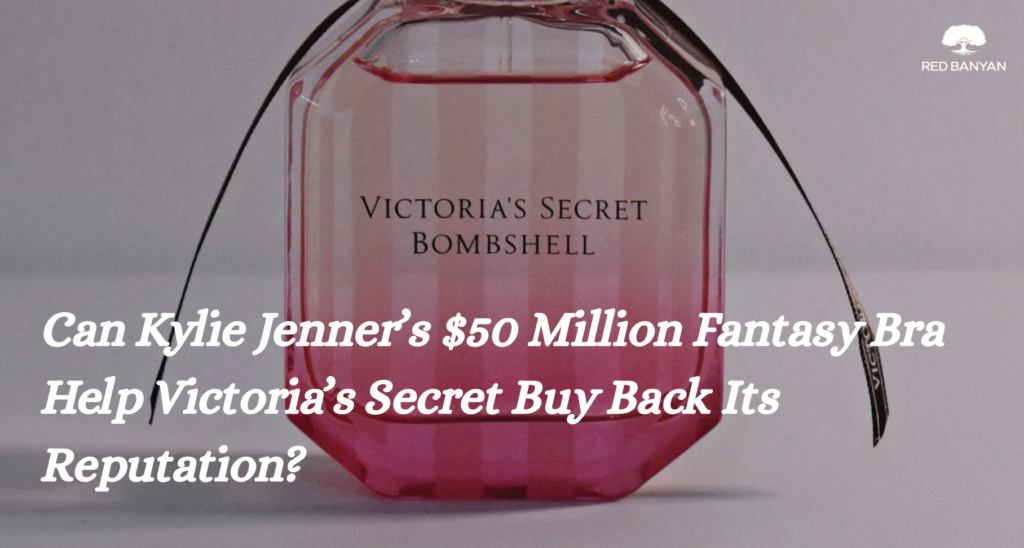
Victoria’s Secret knows how to command attention. But can a $50 million diamond-encrusted bra and one of the world’s biggest influencers help rebuild a brand that has spent years struggling with its identity?
On October 18, Kylie Jenner made her Victoria’s Secret runway debut wearing a Fantasy Bra adorned with 4,410 natural diamonds. The extravagant display marked the return of a signature tradition absent since 2018 and put the lingerie giant back in the global spotlight.
With approximately 380 million Instagram followers, Jenner brings enormous cultural influence to a company attempting to recapture its former popularity.
But publicity and reputation are not the same thing. Behind the spectacle lies a more important question: Can Victoria’s Secret embrace the glamour that made it famous while delivering on its promises of diversity and inclusivity?
Why Victoria’s Secret Retired the Angels in 2021
Criticism of narrow beauty standards pushed the brand to replace its Angels with the VS Collective, a bold move that carried real risk.
For decades, Victoria’s Secret built its reputation around glamorous, predominantly thin supermodels wearing elaborate wings and revealing lingerie. Its iconic Angels became household names, but the brand eventually faced mounting criticism for promoting narrow beauty standards and failing to represent women of different sizes, shapes, and backgrounds.
In 2021, Victoria’s Secret attempted a dramatic brand image transformation. The company retired its traditional Angels and introduced the VS Collective, featuring influential women including Megan Rapinoe, Priyanka Chopra Jonas, plus-size model Paloma Elsesser, and transgender model Valentina Sampaio.
The initiative reflected a major shift in the company’s approach to body diversity in fashion marketing. Instead of focusing primarily on conventional beauty and sex appeal, Victoria’s Secret sought to emphasize empowerment, representation, and individuality.
However, the rebranding strategy struggled to establish a compelling new identity as the company continued facing business challenges. While the shift reflected changing consumer expectations, Victoria’s Secret also risked distancing itself from the glamour that made the brand recognizable worldwide.
The lesson extends beyond lingerie. Companies attempting to modernize must understand what customers value about their existing brands before abandoning familiar identities.
The challenge was never choosing between sex appeal and inclusivity. It was finding a credible way to embrace both.
Why Victoria’s Secret Cast Kylie Jenner for the 2026 Fashion Show
By combining celebrity star power with its iconic runway tradition, Victoria’s Secret is attempting to reconnect with longtime fans and attract a new generation.
Victoria’s Secret now appears determined to reclaim its signature glamour without abandoning its efforts to promote broader representation.
Jenner is a strategic choice for this celebrity-driven marketing campaign. Unlike traditional supermodels, she built her global influence through reality television, social media, and her beauty businesses. Her ability to reach hundreds of millions of followers gives Victoria’s Secret access to audiences that traditional advertising campaigns may struggle to engage.
In modern marketing, influencers are more than brand ambassadors. They are powerful media platforms capable of shaping consumer perceptions and purchasing decisions.
The 2026 Victoria’s Secret Fashion Show also featured models representing different body types and backgrounds, including Ashley Graham, Paloma Elsesser, and Precious Lee, alongside returning Angels such as Adriana Lima and Candice Swanepoel.
This combination reflects an effort to modernize Victoria’s Secret’s marketing strategy by merging its traditional image with a more inclusive approach to beauty.
However, featuring diverse models does not automatically establish an inclusive brand. Critics have questioned whether the representation on the runway goes far enough, particularly when conventional beauty standards continue to dominate much of the show.
That creates both an opportunity and a reputational risk for Victoria’s Secret.
Can Star Power Rebuild Trust in Victoria’s Secret?
Famous faces can generate headlines, but they cannot resolve the underlying issues that damage consumer confidence.
From a public relations perspective, Victoria’s Secret deserves credit for recognizing the value of nostalgia, celebrity influence, and cultural relevance.
The return of the Fantasy Bra, combined with Jenner’s enormous following, demonstrates a sophisticated understanding of how to generate attention in today’s competitive media environment.
But celebrity endorsements are amplifiers, not substitutes for a strong reputation.
Influencer partnerships can introduce a brand to new audiences, create excitement, and encourage consumers to reconsider their perceptions. Yet their impact can be short-lived if the company fails to deliver on the expectations created by its marketing.
Celebrity-driven marketing campaigns also carry risks. A company that ties its image too closely to an individual influencer can become vulnerable to that celebrity’s controversies or changing public popularity.
For Victoria’s Secret, however, the bigger issue is authenticity in brand marketing.
The company spent years distancing itself from the traditional beauty standards associated with its original fashion shows. Its renewed emphasis on glamour and sex appeal does not necessarily contradict its commitment to diversity.
However, consumers may question the brand’s sincerity if its actions appear inconsistent with its promises.
A successful brand reputation management strategy requires consistency between what a company says, what it does, and what customers actually experience.
Why Authenticity Matters More Than Publicity in Brand Rehabilitation
Rebuilding consumer trust requires meaningful action, consistent messaging, and measurable business results.
Victoria’s Secret’s evolving marketing strategy illustrates an important distinction between generating visibility and building a sustainable reputation.
A viral runway moment can spark conversation, but meaningful reputation recovery requires a long-term commitment.
If Victoria’s Secret wants consumers to believe that it embraces women of different body types and backgrounds, that commitment must extend beyond the runway.
Its product offerings, sizing options, advertising campaigns, corporate culture, and customer experience should reinforce the same message.
The company must also understand that not every consumer will respond positively to the same marketing approach. Some customers may welcome the return of the Angels and elaborate runway productions, while others may view the renewed focus on traditional glamour with skepticism.
Effective brand positioning requires understanding these different audiences without sacrificing a coherent identity.
Ultimately, the success of Jenner’s appearance should not be judged solely by media impressions, social media engagement, or the number of headlines generated.
The more meaningful measures are whether consumers develop greater confidence in the brand, return to its stores, purchase its products, and demonstrate long-term brand loyalty.
Is Victoria’s Secret Making a Comeback?
The 2026 show proved the brand can still command global attention. Whether that becomes a lasting comeback depends on what happens after the runway lights fade.
Victoria’s Secret has demonstrated that it can still produce a spectacular fashion show and attract global attention.
Its decision to bring back the Fantasy Bra while featuring one of the world’s most influential celebrities was a powerful publicity move. The inclusion of models representing a broader range of body types also signals an effort to balance the brand’s heritage with evolving consumer expectations.
But the challenge now is turning that visibility into lasting credibility.
The company’s future will depend on whether it can establish a recognizable, authentic identity that celebrates glamour without excluding the women it hopes to reach.
Victoria’s Secret does not have to abandon its past to embrace a more inclusive future. But it must ensure that its brand promises are consistently reflected throughout the business.
A $50 million Fantasy Bra can command global attention. But lasting consumer trust cannot be purchased, no matter how many diamonds or celebrities are involved.
Strategic communications and crisis PR agencies like Red Banyan help businesses navigate brand transformations, manage reputational risks, and build lasting consumer trust. Through proactive reputation management and consistent messaging, companies can turn short-term publicity into long-term credibility and brand loyalty.
Victoria’s Secret Rebrand: Frequently Asked Questions
Victoria's Secret began rebranding in 2021 following criticism of its narrow beauty standards and lack of inclusivity. The company introduced more diverse models and influential ambassadors to promote body positivity, representation, and a broader definition of beauty.
Kylie Jenner's massive social media following and cultural influence help Victoria's Secret reach younger audiences, generate global publicity, and strengthen brand awareness. Her appearance also supports the company's efforts to reconnect with consumers through celebrity-driven influencer marketing.
Celebrity endorsements can increase brand visibility, attract new audiences, and influence consumer perceptions. However, lasting reputation improvement depends on authentic messaging, consistent business practices, and the ability to earn consumer trust beyond promotional campaigns.
Victoria's Secret can strengthen consumer confidence by consistently demonstrating its commitment to inclusivity through diverse representation, accessible product offerings, transparent communications, and customer experiences that reflect its brand promises.
PR and crisis communications agencies like Red Banyan help companies navigate brand transformations, manage reputational risks, and communicate effectively with stakeholders. Strategic reputation management helps businesses turn publicity into credibility and build long-term brand loyalty.